Association Adviser - ASAE Annual Meeting & Exposition
You're Invited!

Are you an association executive looking for a quiet spot to get some work done or connect with a colleague? Stop by the CEO Lounge in the Thomas Murphy Ballroom 1. The Lounge will be open the following days and times:

Tuesday, 7 a.m.-12 p.m. 

The CEO Lounge is sponsored by Naylor Association Solutions.

Conference News

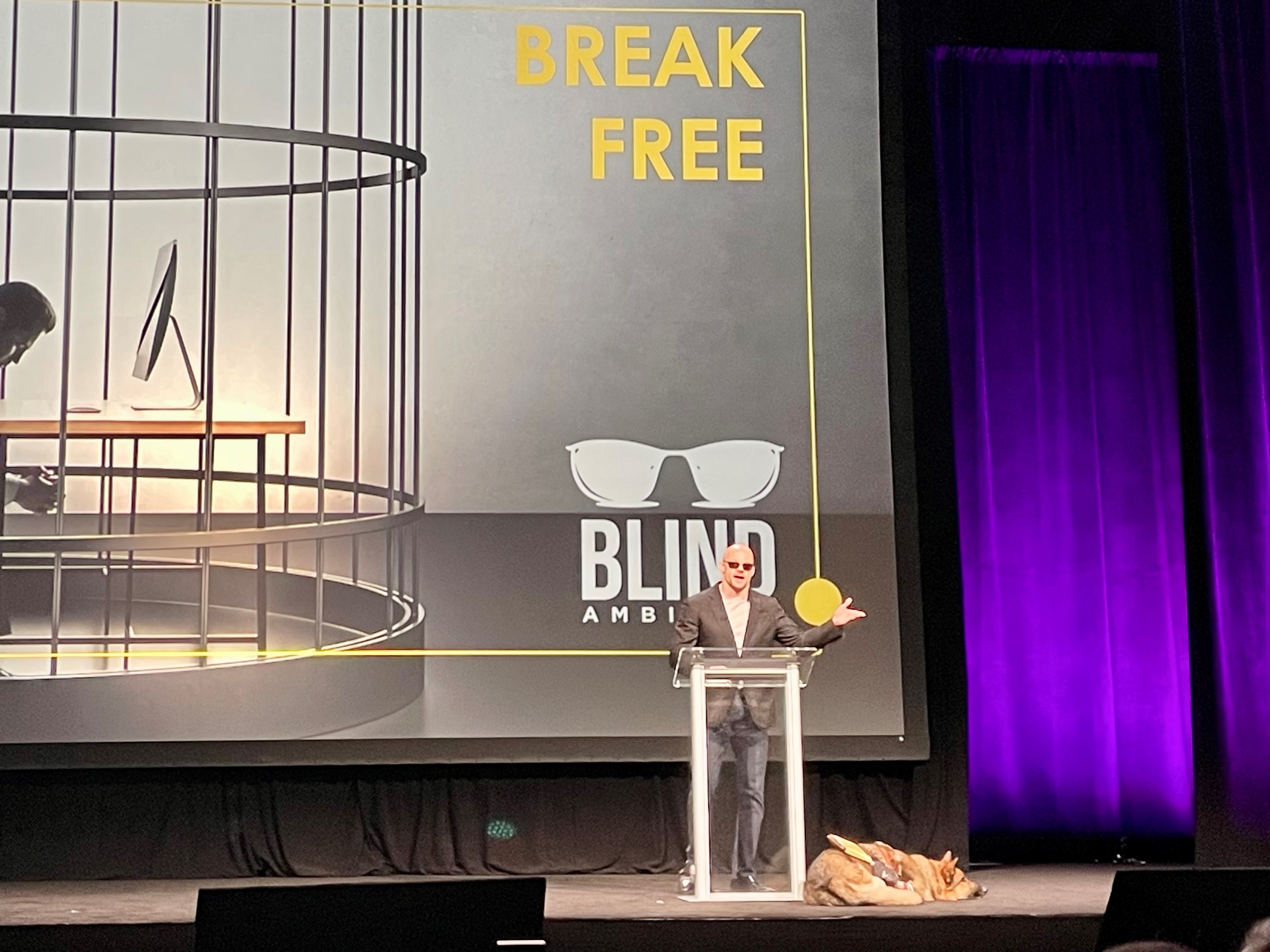
Chad E. Foster believes he is successful not despite being blind, but rather because of it. His disability - going blind in his early 20s due to a hereditary disease - has helped him visualize what others can't see and face overwhelming obstacles.

We all have blind spots we need to learn to overcome, work around or solve for. After all, "you don't know what you can't see when you can't see it," Foster told the general session Monday at the 2023 ASAE Annual Meeting.

Foster said others don't need to go blind to adopt his mindset of "Blind Ambition." They just need to adopt similar principals and see themselves not as victims, but as visionaries. Foster eventually did just that: He stopped feeling sorry for himself ("I didn't want to be blind and bitter"), and he started to look beyond his circumstances and see the opportunities before him. Along the way, he learned the following:

  • Choose your response. Happiness is a decision, Foster said.
  • Tell yourself the right stories. We become our stories, so why would we tell ourselves anything but the best version.
  • Visualize your greatness. Also known as "cognitive reframing," it's how we market ourselves in our own minds. Foster told the audience that we are all capable of more than we give ourselves credit for.
  • Get comfortable with discomfort. You do have to force yourself to improve through focus, effort and determination.
  • Take advantage of disadvantages. Learn to see what could make your weak and turn it into your greatest strength.

Nobody gets a do-over in life, Foster said. Victims stay trapped, but only visionaries see a way forward.

Remote work is here to stay. That's something we all can agree on, said 2023 ASAE Annual Meeting panelists Chip Flater of the American Counseling Association, George Rears, MBA, PMP, CSM, of Achurch Consulting, Mindy Saffer, LEED AP, of CRESA, and Erik Haas of designDATA.

Where we go from here is to address the challenges around maintaining a remote or hybrid workforce, specifically those related to four areas: people, policy, space and technology.

People

The productivity paranoia that took over in the midst of the pandemic proved never to be substantiated. In fact, many employees discovered they could be more productive in a remote environment for specific job roles or tasks.

However, the challenge of how to create and maintain a strong company culture when employees aren't in the same physical space did prove to be real. Associations are protective of the cultures they establish for their staff and members, and there's good reason. A strong culture allows organizations to retain top talent, build stronger teams and trust among employees, and create a sense of belonging.

Company values are at the core of any culture. Values must be clearly defined, embedded and lived throughout the organizations for them to be realized.

Policy

A written policy that addresses legal risks and optimizes operations is the foundation of any remote organization and provides clear communication for all employees. The worst thing you can do is not tell people the expectations, the panel emphasized.

A specific remote work policy is just the beginning though. Policies also need to be created or updated to reflect the move to a remote or hybrid workforce that relate to expectations regarding health, wellness and safety; document storage, access and retention; and job classifications, timekeeping and taxes.

Space

In 2022, 51% of employees said they spent time in the office each week, according to research from Cresa, meaning that the office is still relevant to workers. That same survey showed that admin and support teams spent more time in the office than leadership, and the main reason people gave for their desire to spend time in the office is "to focus on my work."

Today's office may look different though. Organizations are restructuring their offices based on the needs of a hybrid workforce and to meet the demands of today's workers. The new office is a blend of clubhouse, coffee shop, library, creative lab, and conference center, corporate office and boutique hotel. In general, it combines "me" space with "we" space so workers can go between the two seamlessly.

Panelists recommended that organizations that are redesigning and right-sizing for this new workforce should be proactive in reinvesting any savings into the needs of a flexible workforce.

Technology

A new approach to work requires new technology. The panelists noted three requirements: a single collaboration hub, a meaningful hybrid meeting platform, and the proper hardware, connectivity and cybersecurity.

New tools only go so far if they're being used to continue old process. Managing the change with intentionality is key.

For most associations, earning non-dues revenue is at the center of their annual goals. The revenue created through sponsorship and advertising efforts enable to the association flexibility to innovate, experiment and invest in ways that move the mission forward.

Kim Davies of Naylor Association Solutions shared five ways for associations to manage their advertising operations and grow non-dues revenue in her session at the ASAE Annual Meeting Expo Hall's SHAPE Theater.

  1. Understand your internal resources, specifically your staffing. Make sure your team knows their responsibilities and expectations for how they will drive revenue and success.
  2. Manage your advertising inventory. To bring in more advertising, you have to understand your availability, monitor performance, and optimize pricing. Understand what you have to offer helps you maximize value.
  3. Understand your analytics. Get insights and metrics that you can track and strategize around.
  4. Identify your audience and their preferred platforms. Meet your members where they are, tailor messages to like subgroups or personalize on a deeper level with tools like AI to increase your relevance and effectiveness. Don't forget advertisers and sponsors - they're an important part of your membership.
  5. Integrate your offerings. Create packages that allow financial supporters to invest and advertise across all your platforms as effectively as possible. It'll allow you to increase your brand and grow your revenue faster.
Daily Schedule

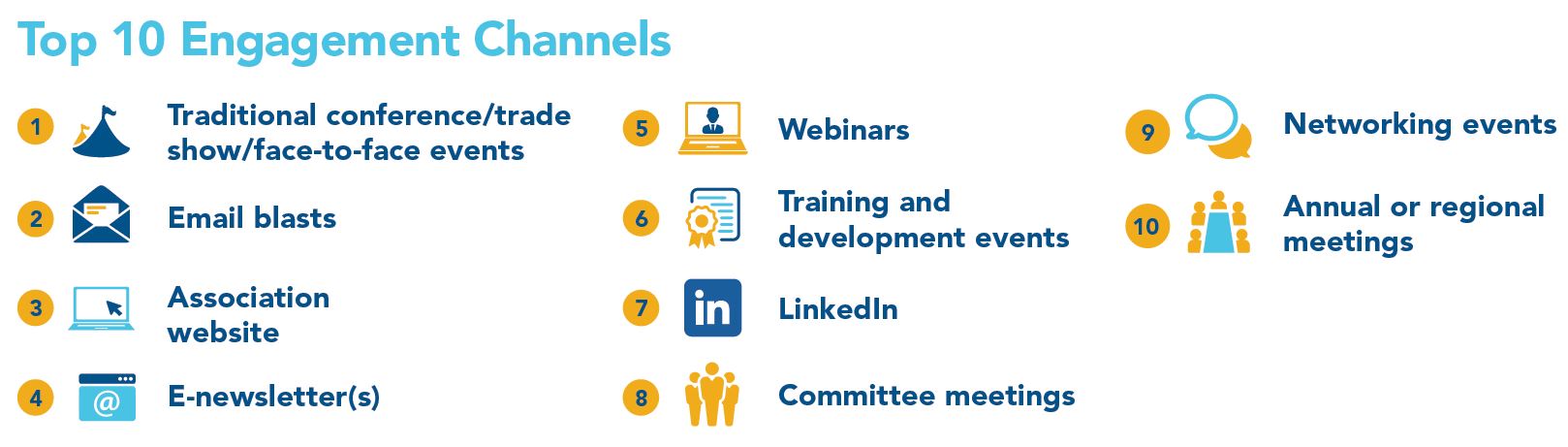
This year marked a resurgence in face-to-face events, as association members are back full swing to traveling to in-person events. The event space is experiencing a renaissance of sorts with more than 9 in 10 ranking traditional conferences, trade shows and face-to-face events as the top valued member engagement tool, up 10 percentage points from last year and on par with the 2021 ranking, as people shared excitement at the initial post-pandemic return to normality. Virtual conferences and hybrid events fell in popularity, dropping more than 7 percentage points from last year.

To see all the top challenges facing associations plus much more, download the 2023 Association Benchmarking Report today!

Keynotes, Sessions & Seminars

Selecting and onboarding a new AMS is a huge undertaking for an association! It requires the buy-in of your entire team and an investment in financial resources and time.

Make the process a little easier by understanding what to expect with Naylor's ebook The Definitive Guide to Choosing an AMS. This resource will help you:

  • Get the most out of your new AMS by ensuring it can handle your needs
  • Avoid migration headaches and unwelcome surprises by asking the right questions
  • Grow your association by building a long-term AMS partnership

Download this ebook today!