Wow! 2025 was certainly an exciting year in Canada…although all the biggest news in Canada was somehow all about what was going on south of the border.
|
CWWA is proud to support Operators Without Borders as our main charity of choice, and we truly appreciate all the support you, our members, provide to this terrific effort.
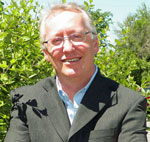
Hurricane Melissa hit Jamaica and other Caribbean islands just as our National Conference began in Victoria in November. Valerie Jenkinson, OWB fonder and chair, made an appeal to all for their financial support, while Madeleine Butschler, founding board member and super volunteer, welcomed all to the OWB booth.
|
Share your expertise and experiences at the NWWC 2026 this November 1 - 4 in Halifax, Nova Scotia.
Submit your proposal by March 31, 2026
|
We smashed records and hosted our most successful NWWC. Here is a quick summary of the NWWC by the numbers.
The Canadian Infrastructure Council has now released its first National Infrastructure Assessment Report.
With its focus on addressing the national housing crisis, the federal government established the Canadian Infrastructure Council early in 2025 to create a National Infrastructure Assessment. After months of collecting data on infrastructure inventories, population forecasts and climate considerations, and conducting interviews with experts, including the CWWA, this council of sector experts has prepared an extensive report. The report focuses on the infrastructure investments that will be required to support the housing targets being set in place – what they call “housing-enabling infrastructure”.
|
 
|
Join the Ontario Water Consortium for a three-part winter webinar series featuring leading researchers from OWC’s network. Learn how OWC experts are addressing key water challenges in Ontario, including tracking organic contaminants, managing groundwater resources, and reducing greenhouse gas emissions at wastewater treatment plants.
|
The Government of Alberta has announced its intention to “make it easier for communities, farmers, ranchers and businesses to use and share water”. Bill 7 aims “to streamline the process of water licensing” and “amendments would allow the Alberta government to set timelines on how long it would take to review applications from farmers, ranchers and other groups so they’re able to effectively use their water”. “Alternative water sources, like rainwater from rooftops or reused wastewater, would also become easier to use under Bill 7”. The change would be made by amending the Water Act [RSA2000,cW-3].
|
ES&E Magazine
Ontario's Ministry of the Environment, Conservation and Parks is proposing changes to streamline the protection of drinking water sources under the Clean Water Act, 2006, as part of the Building a More Competitive Economy Act, 2025 (Bill 56). These amendments, some already passed and others under consultation, aim to reduce approval times and administrative costs, in increase municipal flexibility, and maintain water quality safeguards. The changes include allowing local source protection authorities to approve certain plan updates, setting clearer provincial approval timelines, simplifying consultation requirements, modernizing notification practices, and giving the Safe Drinking Water Act director discretion to waive prohibitions on new water sources.
|
Gazette officielle du Québec
The Government of Quebec has announced its intention to amend the Regulation respecting the regulatory scheme applying to activities on the basis of their environmental impact and “to reduce the information required to file an application for authorization where the services of a professional are required to prepare the project or application”. According to the Government, the change would make “certain provisions of the Environment Quality Act [RSQ,cQ-2] applicable to an application for the renewal of an authorization, in particular as regards the information and documents to be provided in support of an application and the elements the Minister can take into consideration when assessing a project’s impacts.”
|

|

|
Inside Climate News
Farmland is everywhere in tiny Unity Township, from neat fields of corn to open cattle pastures. And so are layers of wet organic sludge, a onetime fertilizer that has triggered a crisis over “forever chemicals” in central Maine and how best to rid the land of the poisons.
|
Virginia Mercury
A flush of a toilet, the rinse of a washing machine, or the discharge from factories – it all ends up as wastewater. That waste is then treated and made into a sludge called biosolids. Biosolids can be converted to agricultural fertilizer and by using it, many farmers in Virginia may be unknowingly spreading toxic chemicals on their land that could end up in crops and the state’s waterways.
|
Guelph Today
Some Guelph businesses are reducing their water use by tens of thousands of litres per day, saving money and lessening their environmental impact as a result, thanks in part to a city run fund that helps pay for permanent conservation upgrades.
|
Water Canada
Health Canada has launched a new public dashboard that tracks drug use through wastewater sampling, a tool officials say will strengthen early-warning systems and support responses to Canada’s ongoing overdose crisis.
|
ABC News
A federal judge has approved the plan to distribute settlement funds more than a decade after Flint water crisis started. U.S. District Judge Judith E. Levy authorized the distribution process on Wednesday, allowing Special Master Deborah Greenspan to finalize terms and implement the payment process for claimants.
|
The Construction Broadsheet
More and more, general contractors, construction managers and subcontractors are being brought into a project earlier than they traditionally would be as owners and developers seek expert advice on constructability and other issues that could wind up costing those developers and owners money or delay completion.
|
ES&E Magazine
A University of Guelph researcher known for her work protecting global water supplies has been named one of Canada’s Most Powerful Women: Top 100 Award Winners for 2025 from the Women’s Executive Network.
Dr. Heather Murphy, professor in the Department of Pathobiology at the Ontario Veterinary College at the University of Guelph, was recognized in the STEM category for advancing global access to clean water and reducing waterborne diseases. The annual awards honour professional women who set bold examples across sectors and
|
ES&E Magazine
A new national survey suggests that while Canadians increasingly recognize freshwater as the country’s most vital natural resource, most do not feel well informed about the issues affecting it.
|
ES&E Magazine
The Ontario government has passed Bill 60, legislation that advocates say will open the door to water privatization and weaken long-standing public health safeguards. The move, advanced quickly through the Legislature, has drawn sharp criticism from a coalition of environmental, labour, and health organizations.
|

|

|
24
Mar 2026
|
Charlotte Convention Center | Charlotte, North Carolina
|
|






 The National Water & Wastewater Conference